



2023: the first sparks
On 30 November 2022, OpenAI released ChatGPT, and suddenly the whole world was talking about artificial intelligence. For us, the first sparks came in 2023. On 6 November 2023, OpenAI presented custom GPTs and the Assistants API at its first DevDay. For us, that was the moment when a toy became a tool for everyday work. Before that we had already experimented with Midjourney: first image ideas, first mood boards and, above all, a lot of questions.
Dennis turned those questions into answers early on. In May 2023 he wrote the first article of his series “AI & Creativity”, and at Websummercamp 2023 he showed what the new tools mean for creative work and design. At the same time we followed the talks of Andrej Karpathy, who explains as clearly as anyone how language models work and where their limits are.
Article
AI & Creativity #1: The Bigger Picture
The last six months in AI have been a wild ride. Hundreds of new creative tools and possibilities opened up, and it might have been just a glimpse of things to come.

A new way of thinking
In 2023 and 2024 Dennis gave many talks on creativity and AI, inside the company and outside it. They moved us into a different way of thinking: away from “What can the tool do?” towards “What do we want to achieve, and which part of it can be prepared?”. Amar asked the same question from the development side.
Dennis later described a simple model for this: generative AI tools develop in four phases, “Exploring, Controlling, Automate, Autonomize”. First you try things out, then you learn to steer the result, then you automate recurring steps, and only at the end do systems work on their own. The model helped us judge honestly where we stood. In 2023 we were exploring; in 2024 we were learning to control.
Article
AI & Creativity – #5: Controlled Inputs – The Key to High-Quality Output
Generative AI tools have evolved into a dynamic field. This evolution of AI tools can be segmented into four defined phases: "Explore, Control, Automate, Autonomize".


Summer 2024: twenty small tools
By summer 2024 Amar had already built more than 20 small tools, most of them with Streamlit. We used them where they helped: for Google Ads campaigns, as text generators, as persona generators. Each tool solved one small task, and each showed us where AI really saves time and where it does not.
Many single solutions turned into a pattern. We built the tools in a modular way, and an internal framework grew out of them: shared building blocks for models, data and interface. The first concepts for Avidia and the brand came out of this period too.
From a podcast to the Customer Radar
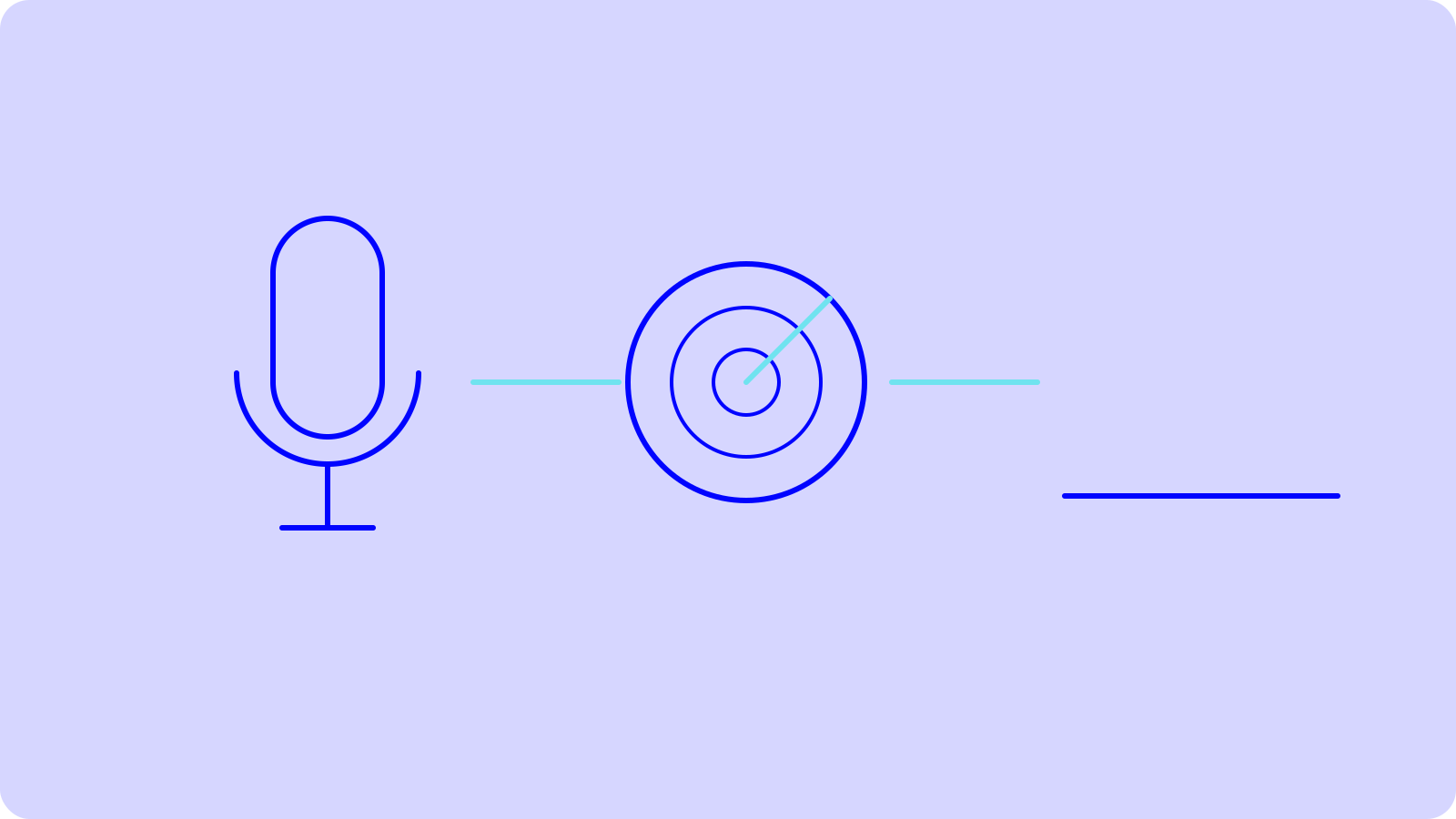
The first project in which this way of working carried a client started with a simple idea: a podcast. With CSS, a Swiss health insurer, it became first a prototype, then the full Customer Radar and after that an analysis tool. AI helps to evaluate feedback from thousands of contacts every month and to condense it to what matters: a short version you can listen to in a few minutes. In the first quarter of 2025 that was more than 30,000 pieces of feedback from three touchpoints.
This project taught us what matters besides the technology. Free text is anonymised before the analysis, and it is processed only on servers in Switzerland or the EU. Several language models are compared with each other, and people read random control samples. The results become a podcast of three to five minutes per edition. That way the findings reach people in the company who would never read a report.
Case study · CSS Versicherung
Every customer voice. Heard company-wide.
CSS, one of Switzerland's health insurers, receives thousands of customer feedbacks every month.
Coming soon

Summer 2025: the decision
After summer 2025 the curiosity had spread through the whole team. Amar put a clear choice in front of us: either we change the way we work, or we won’t be here in 2027. It was uncomfortable, and it was right. In the same year, coding agents such as Claude Code became good enough to work on real projects.
A smaller team started working with new methods. There was a lot of trial and error, but under the clear guidance of Amar and Dennis we moved forward. The rule was the same from day one: agents prepare, people decide and sign off.
How a project runs with us today
Trial and error has become a fixed process. It looks a little different in each discipline, but it always follows the same pattern:
- Brief: a person agrees the goal, the scope and the responsibilities with you.
- Preparation: agents research, draft, write code and tests or analyse data.
- Review: a person on our team checks the result, corrects it and decides.
- Sign-off: only after sign-off does anything go to you or live.
That sounds simple, and it is the most important part. Agents make us faster, but they do not take responsibility. That stays with people you know.
The rules that make it work
The more agents work with us, the more clear rules matter: guidelines for code and copy, a shared memory for projects and fixed review steps before every sign-off. That is why, from mid-2025, we worked intensively on ISO 42001, the standard for AI management systems. In 2026 we were certified to it. For us it was less a certificate than a school: we had to describe exactly which model runs where, what data it sees and who signs off the result.
In 2026 new topics came up that grew with the number of applications: how do we build with AI, securely and traceably? How do we protect AI applications against misuse and data leaks? Where and how do we host models and data? How do we manage data across all projects, and what do our processes for it look like? We worked through these questions as part of our ISO 42001 certification, and we grew as a team with them.
- Building with AI: guidelines, shared memory and review steps for architecture, development and deployment.
- AI security: access, sign-offs and tests before an application goes live.
- AI hosting: models and data in Switzerland or the EU, documented per project.
- Processes and data management: who sees which data, how long it is kept and who is responsible for a result.
A project for everyone
By the end of 2025, every team member took on a project of their own, to learn the new way of working first-hand. Mine was the Cockpit. After three attempts I had a version that worked. Today it is our central tool for running the agency. I tell the story of how it came about in the next article.
These projects were a success, and then things moved fast. Between the fourth quarter of 2025 and October 2026 we built more than ten applications, for clients and for ourselves. We changed many processes, found our new way of working and kept improving our modules.
You will find much of it in Labs today: the AI Suite as the shared framework, and our products. Many of them are in real use. Others began as concepts and reappear in different ways in client projects.
Labs
Our AI suite is an agentic framework: not a single tool but a flexible approach.
Labs
Each product started in a client project or in our own operation, and each runs on the same framework: the application layer of the AI suite, with models that can be swapped and hosting that stays yours.

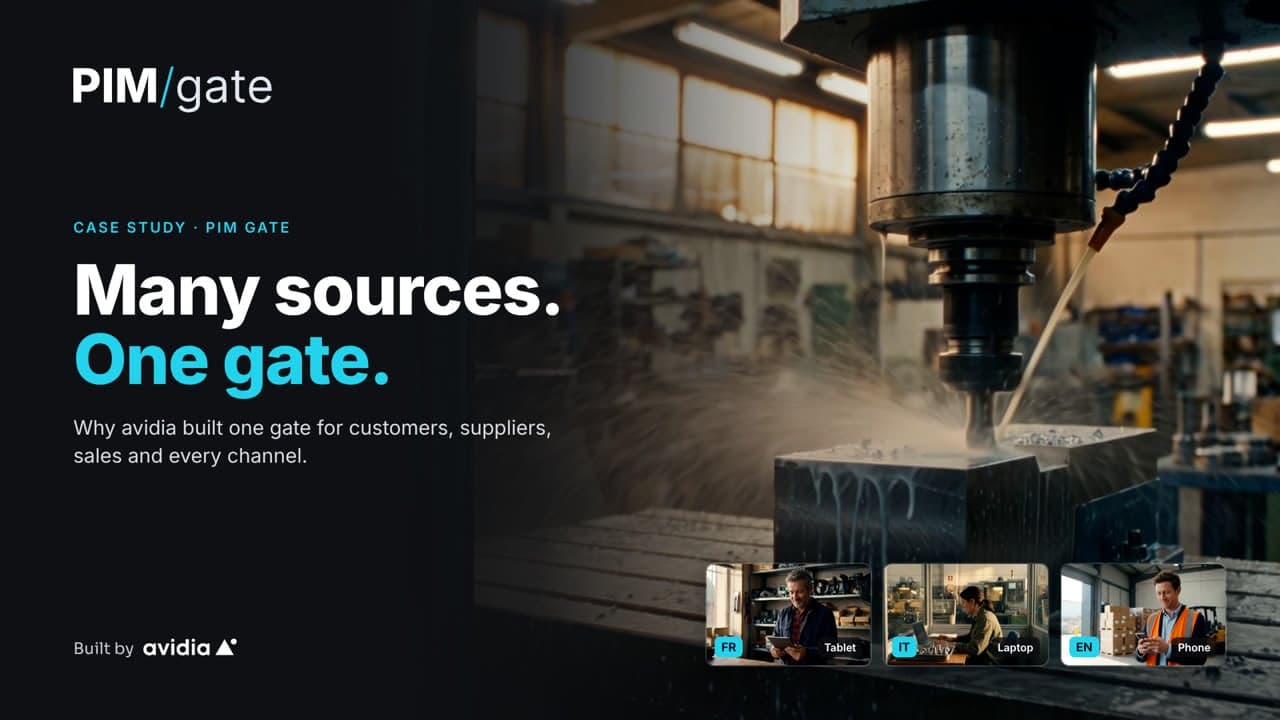
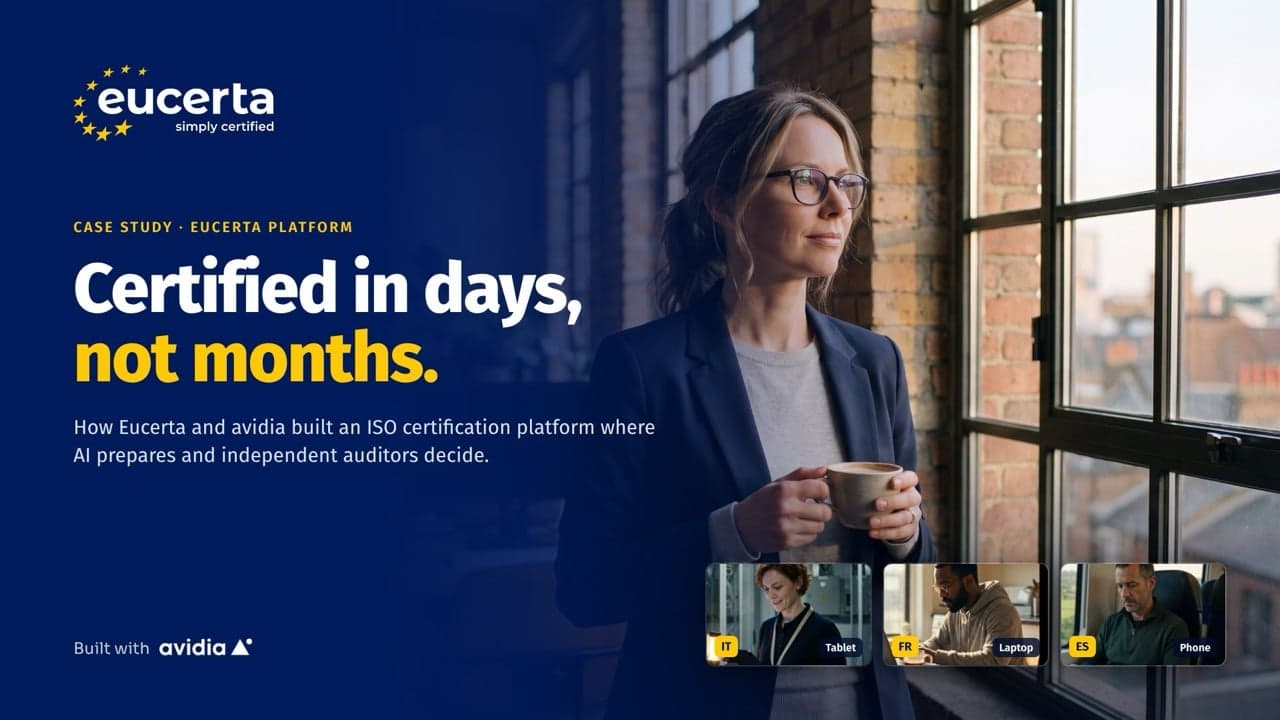
We have written up three of these projects as case studies: how many data sources became one gate for product data, how a certification platform makes ISO certificates possible in days instead of months, and how a content hub produces multilingual content for a learning company.
Case study · PIM Gate
Your PIM holds the data. PIM Gate opens it.
For 15 years, avidia has connected PIMs, ERPs, shops and DXPs for manufacturers and wholesalers.
Case study · Eucerta
Certified in days, not months.
Eucerta is a digital certification body for management systems.
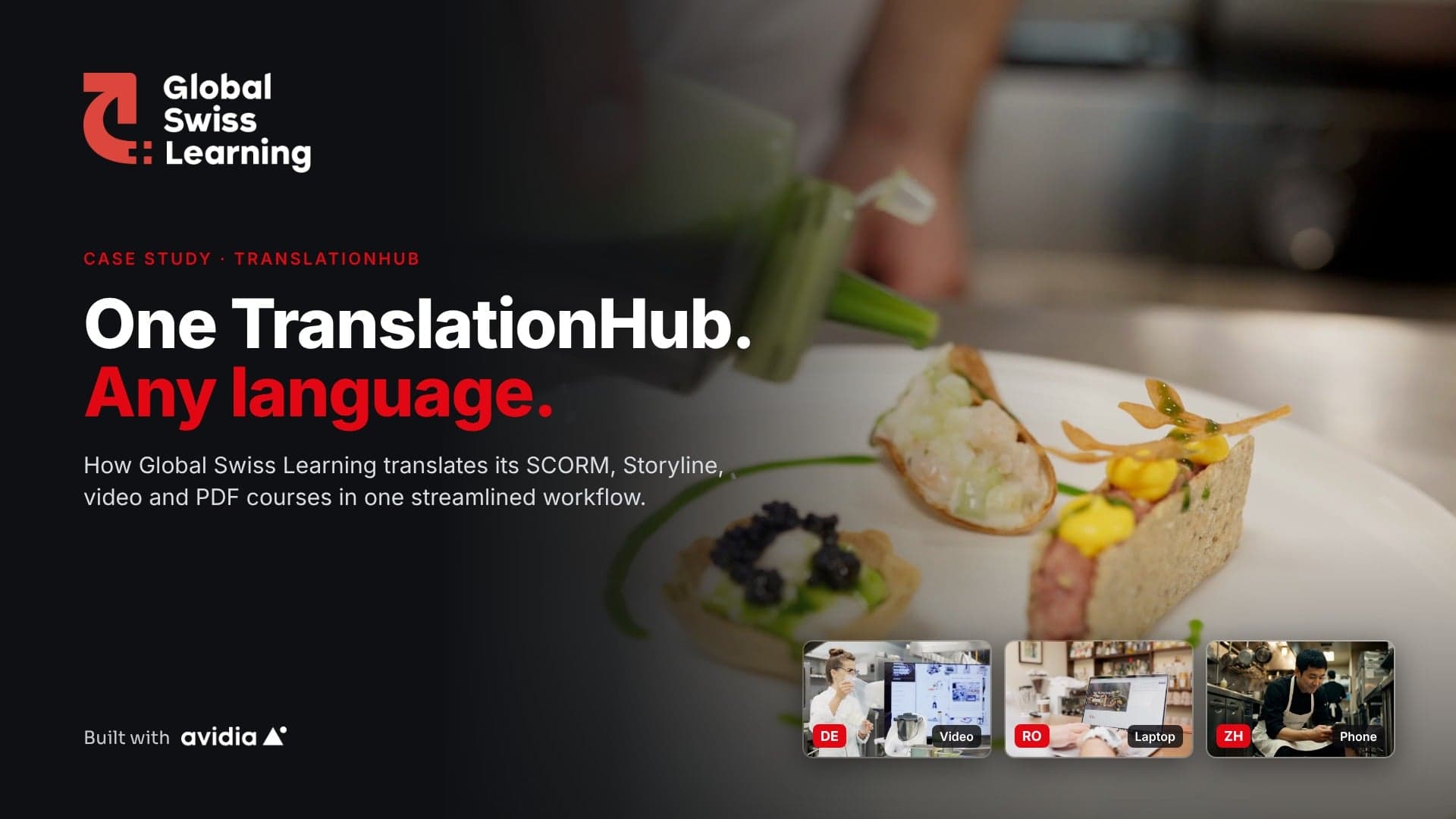
Case study · Global Swiss Learning
One content hub. Any language.
Global Swiss Learning teaches Swiss culinary and hospitality craft to learners around the world.
What this means for you
- Faster to a prototype: an idea can be tried out in days, before you invest in building it.
- People decide: every result is checked and signed off by a person on our team.
- Building blocks, not one-offs: what we build for one project feeds into our framework and makes the next project faster and safer.
- Data within a frame: where data is processed is documented per project: in Switzerland, in the EU or on your own infrastructure.
- Start small: one concrete first problem is enough. Most of our tools began as a small tool for a single task.
One thing matters to us here: we do not see ourselves as vibe coders. We are a team that has been building software, running platforms and taking responsibility for content for many years. The knowledge, the architecture and the standard of quality come from us. Agents speed up this process enormously, but they replace neither the experience nor the responsibility for what finally goes live.
Is your team at a similar point? Write to me at hello@avidia.ai, and we will work out together where you start.